
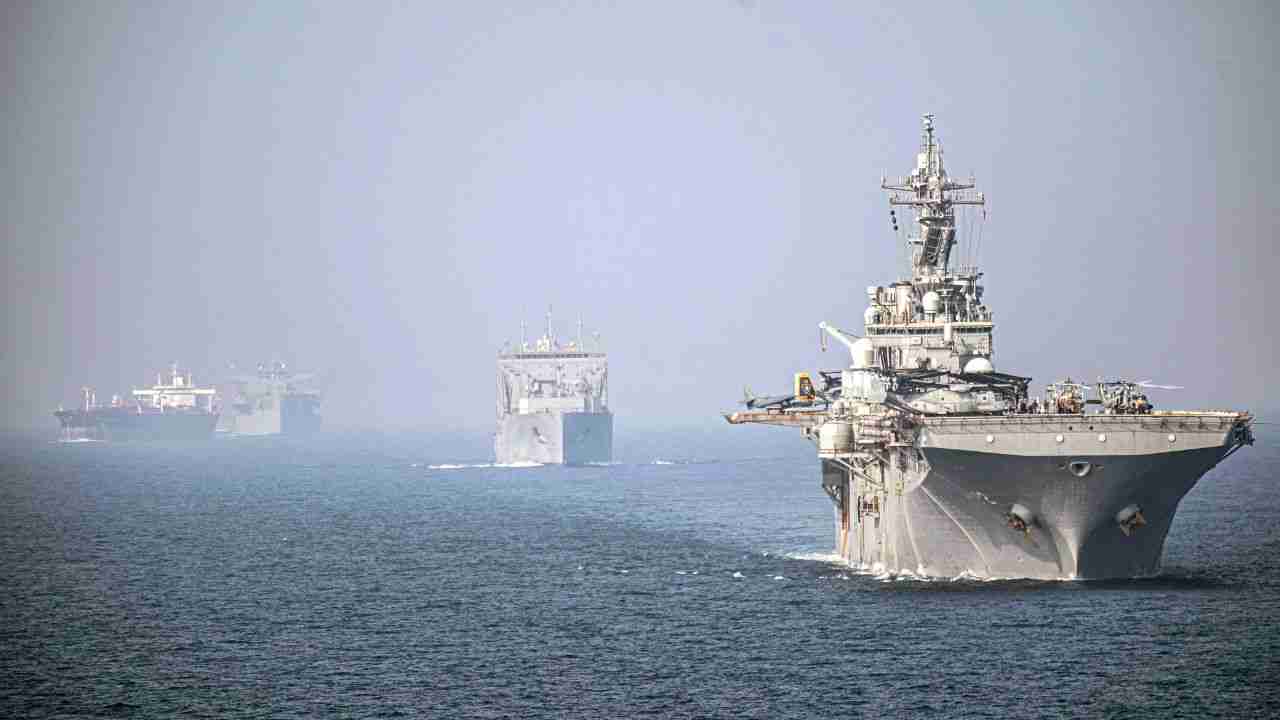
The United States Navy is not yet prepared to begin escorting oil tankers through the Strait of Hormuz, one of the most strategic maritime routes in the world for transporting oil.
The information was confirmed by the U.S. Secretary of Energy, Chris Wright, who said the operation should occur soon, possibly by the end of the month, but that at this moment American military resources are focused on reducing Iran’s offensive capabilities. The plan emerges amid the intensification of Iranian attacks against commercial vessels in the region, while the country’s new supreme leader, Mojtaba Khamenei, promises to keep the strait closed to maritime traffic.
The possibility of naval escort had already been mentioned by President Donald Trump in early March, when he declared that the U.S. Navy would begin accompanying tankers through the strait “as soon as possible.” However, the confirmation that the operation could take weeks increases concerns in international energy markets, which are already under pressure due to the conflict. Analysts warn that fully reopening the route may require more complex military actions, including ground operations to control areas of the Iranian coastline near the strait.
Even without troops on the ground, experts emphasize that escorting tankers would be an extremely risky mission. Warships involved in the operation would be exposed to threats such as mobile anti-ship missiles launched from the Iranian coast, as well as naval mines. Western officials say Iran may have begun deploying mines in the strait, which would make navigation even more difficult during an armed conflict. While some analysts advocate reducing tensions as the best solution, U.S. officials argue that Iranian and Chinese ships are still transiting through the area, indicating that the route may not be completely mined.
At the same time, the campaign of attacks against commercial vessels continues in other parts of the region. Two oil tankers were hit and set on fire in Iraqi waters near the port of Basra, causing at least one death and forcing the suspension of the country’s oil operations. Initial reports indicate that the vessels may have been struck by unmanned surface vehicles.
The worsening conflict in the Middle East has also caused a strong impact on the global energy market. The price of Brent oil has once again exceeded the $100 per barrel mark, while the International Energy Agency announced the largest release of strategic oil reserves ever carried out to reduce fears of shortages. At the same time, U.S. authorities estimate that just the first six days of the war against Iran have already cost the United States more than $11 billion, demonstrating the high financial and strategic price of the military escalation in the region.
Source: The War Zone | Photo: X @USNavy | This content was created with the help of AI and reviewed by the editorial team
Bessent: “That was always in our planning — the chance that the US Navy or perhaps an international coalition will be escorting tankers through. There are tankers coming through now. We know that they have not mined the Straits.” pic.twitter.com/aycuYODMxw
— Aaron Rupar (@atrupar) March 12, 2026
